
The Future of End-to-End Supply Chain Management: Innovations to Watch
In an increasingly interconnected and competitive world, end-to-end supply chain management is no longer just about moving goods efficiently—it’s about building resilient, data-driven, and customer-centric ecosystems. As businesses face rising global demands, fluctuating market conditions, and heightened customer expectations, supply chain innovation has become a strategic necessity rather than an operational upgrade.
Let’s explore the future-forward technologies and trends that are revolutionizing the way supply chains are managed worldwide.
1. AI & Predictive Analytics for Smarter Decisions
Artificial Intelligence is transforming supply chain forecasting and decision-making. With predictive analytics, businesses can:
- Anticipate demand fluctuations with higher accuracy.
- Optimize inventory levels and reduce holding costs.
- Detect potential disruptions before they escalate.
By processing real-time data from multiple sources, AI empowers businesses to make data-backed decisions rather than reactive adjustments.
2. IoT-Driven Real-Time Visibility
Internet of Things (IoT) devices such as smart sensors and tracking systems offer end-to-end shipment visibility. This technology enables:
- Real-time location tracking of cargo.
- Live condition monitoring (temperature, humidity, pressure).
- Instant alerts for deviations or delays.
In industries like pharmaceuticals, chemicals, and perishables, IoT innovation is becoming a non-negotiable requirement for quality assurance.
3. Blockchain for Transparent and Secure Supply Chains
Blockchain introduces an immutable and transparent way to record every transaction across the supply chain, ensuring trust and traceability.
Benefits include:
- Reduced documentation fraud.
- Faster customs and compliance processing.
- Improved accountability across stakeholders.
For global logistics players, blockchain ensures seamless trust between shippers, carriers, and customers.

4. Automation & Robotics in Warehousing and Distribution
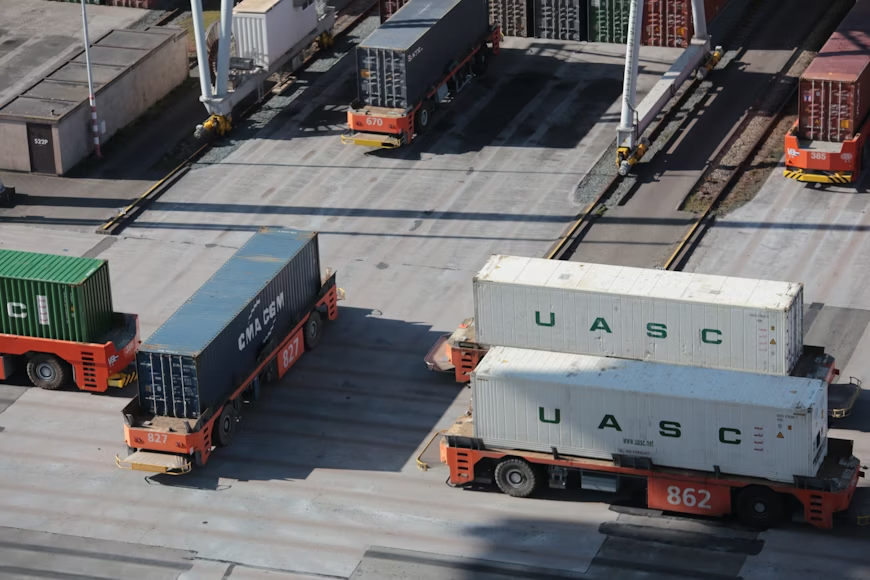
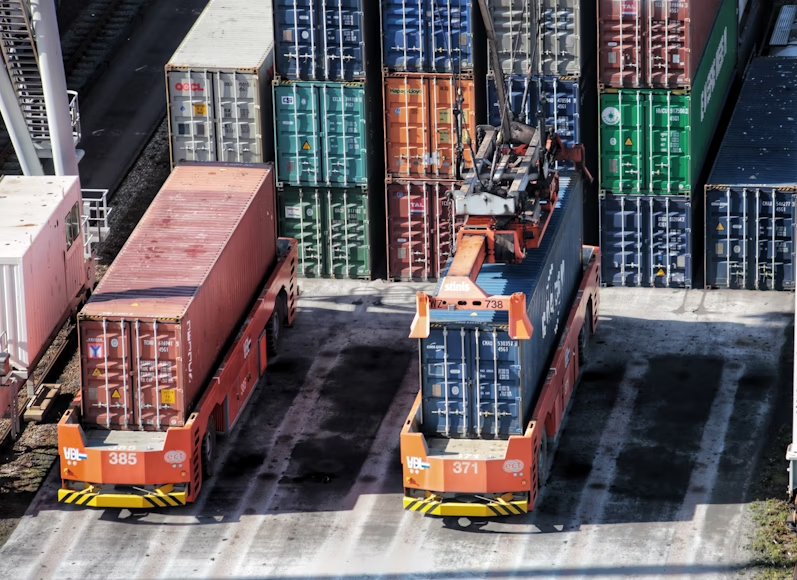
From robotic pallet movers to AI-powered fulfillment centers, automation is improving both speed and accuracy in logistics.
Advantages include:
- Lower manpower dependency for repetitive tasks.
- Faster order picking and sorting.
- Enhanced safety and consistency in warehouse operations.
Future-ready supply chains will be human + machine collaborative ecosystems.
5. Sustainable Logistics and Green Supply Chains
Global trade stakeholders are now focusing on eco-conscious logistics strategies.
Innovations include:
- Carbon tracking tools integrated into logistics dashboards.
- Electric and low-emission fleets for last-mile delivery.
- Energy-efficient warehousing and packaging innovations.
Sustainability is no longer just a CSR activity—it’s a competitive differentiator.
6. Integrated Supply Chain Platforms for Seamless Collaboration
Businesses are moving away from siloed systems and shifting to integrated supply chain management platforms that bring together:
- Freight forwarding
- Customs compliance
- Documentation & trade finance
- Cargo visibility
- Performance analytics
With unified dashboards, decision-makers gain 360° visibility of shipments, compliance, and cost—everything in one place.
- +91-44-25210722 / +91-44-49266699
- info@fairmacs.com
- Fairmacs Shipping and Transport Services Pvt Ltd No.4/244, Sri Devi nagar, 1st street, Kattupakkam, Poonamallee, Chennai -600 056